
Tool Steels
D3 Steel is a high-carbon, high-chromium cold-work tool steel known for its extremely high wear resistance and high hardness. It is mainly used for tools and dies that operate at room temperature and require strong resistance to abrasion and deformation. Because of its high carbon and chromium content, D3 steel can achieve very high hardness after heat treatment, making it suitable for heavy-duty industrial tooling applications.
D3 steel typically contains about 2% carbon and around 12% chromium, along with small amounts of other alloying elements. These elements give the steel excellent wear resistance, compressive strength, and edge retention, although its toughness is slightly lower compared to some other tool steels. After proper heat treatment, D3 steel can reach a hardness of around 58–64 HRC, which helps tools maintain sharp cutting edges and long service life.
Due to its strong wear resistance, D3 steel is widely used for manufacturing blanking dies, stamping dies, cold forging dies, shear blades, punches, thread rolling dies, and industrial cutting tools. It is commonly used in industries such as automotive, metal processing, machinery manufacturing, and tool production, where tools must withstand continuous friction and heavy mechanical loads.
Main characteristics and applications
Cutting tools for sheets up to 4 mm thickness, trimming dies, blanking dies for paper and plastics, shear blades and rotary shear blades for sheet thicknesses up to 2 mm, drawing and deep-drawing tools. Woodworking tools, stone pressing tools, pressure pads and highly wear-resistant plastic moulds, profile rolls.
Steel properties
12 % ledeburitic chromium tool steel with extreme wear resistance.
Comparable standards
| DIN | W.Nr | AFNOR | AISI/ASTM | JIS |
|---|---|---|---|---|
| X210Cr12 | 1.2080 | Z200C12 | D-3 | SKD1 |
Chemical composition (typical; in weight %)
| C | Si | Mn | P (Max) | S (Max) | Cr |
|---|---|---|---|---|---|
| 1.90-2.20 | 0.10-0.60 | 0.20-0.60 | 0.03 | 0.03 | 11.0-13.0 |
Physical properties (reference values)
| Property | 20°C | 100°C | 200°C | 500°C |
|---|---|---|---|---|
| Thermal expansion coefficient (10⁻⁶/°C) | 10.8 | 11.7 | 12.8 | — |
| Thermal conductivity (W/m·K) | 16.7 | — | — | — |
Heat treatment
| Treatment | Temperature (°C) | Holding Time | Cooling | Comments |
|---|---|---|---|---|
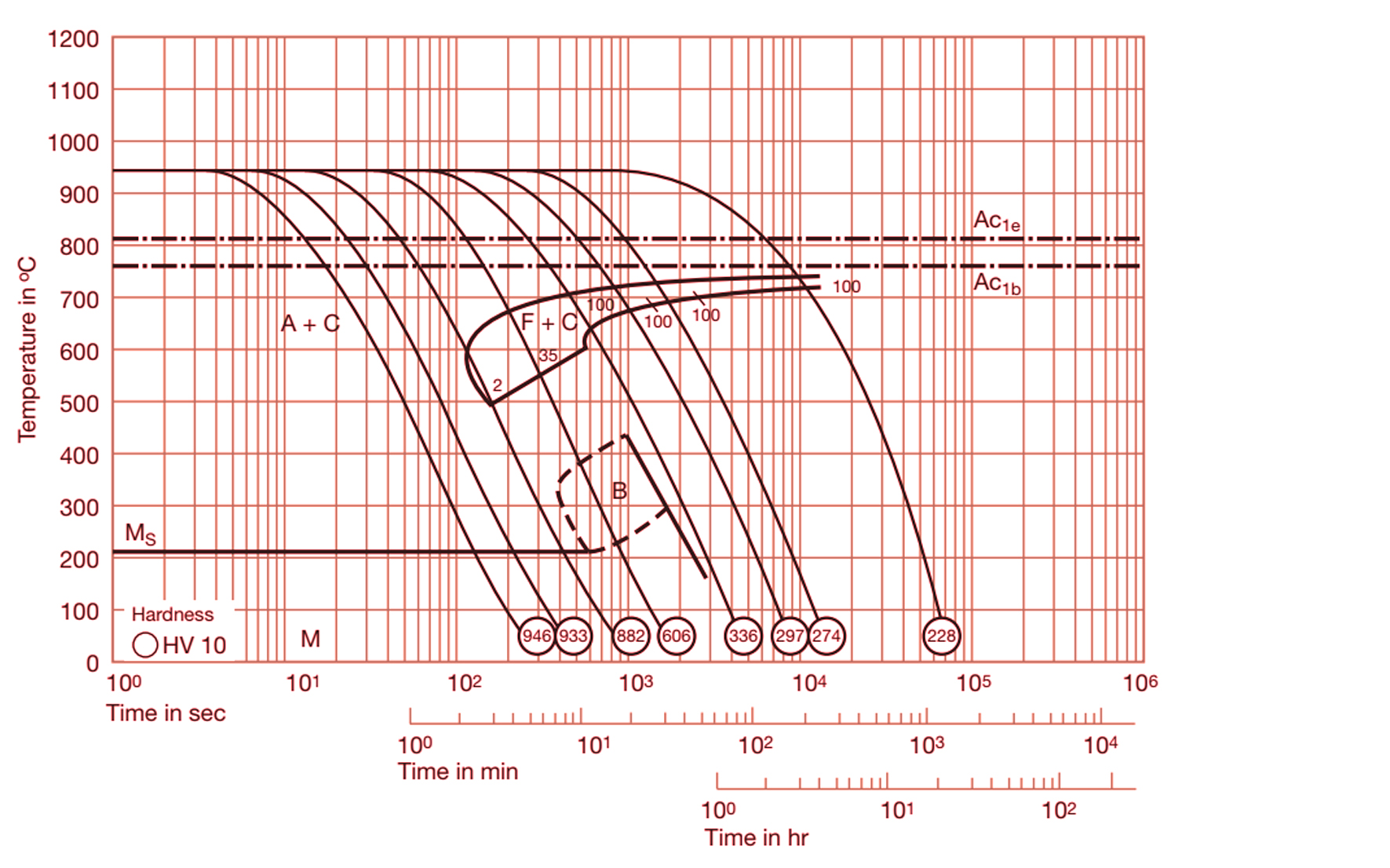
| Annealing | 800 – 840 | Min. 2 min/mm | Furnace | Hardness: max. 250 HB |
| Stress relieving | 650 – 700 | Min. 2 min/mm | Furnace | — |
| Hardening | 930 – 960 / 950 – 980 | Min. 1 min/mm | Air, oil or salt bath | Hardness: 64 HRC |
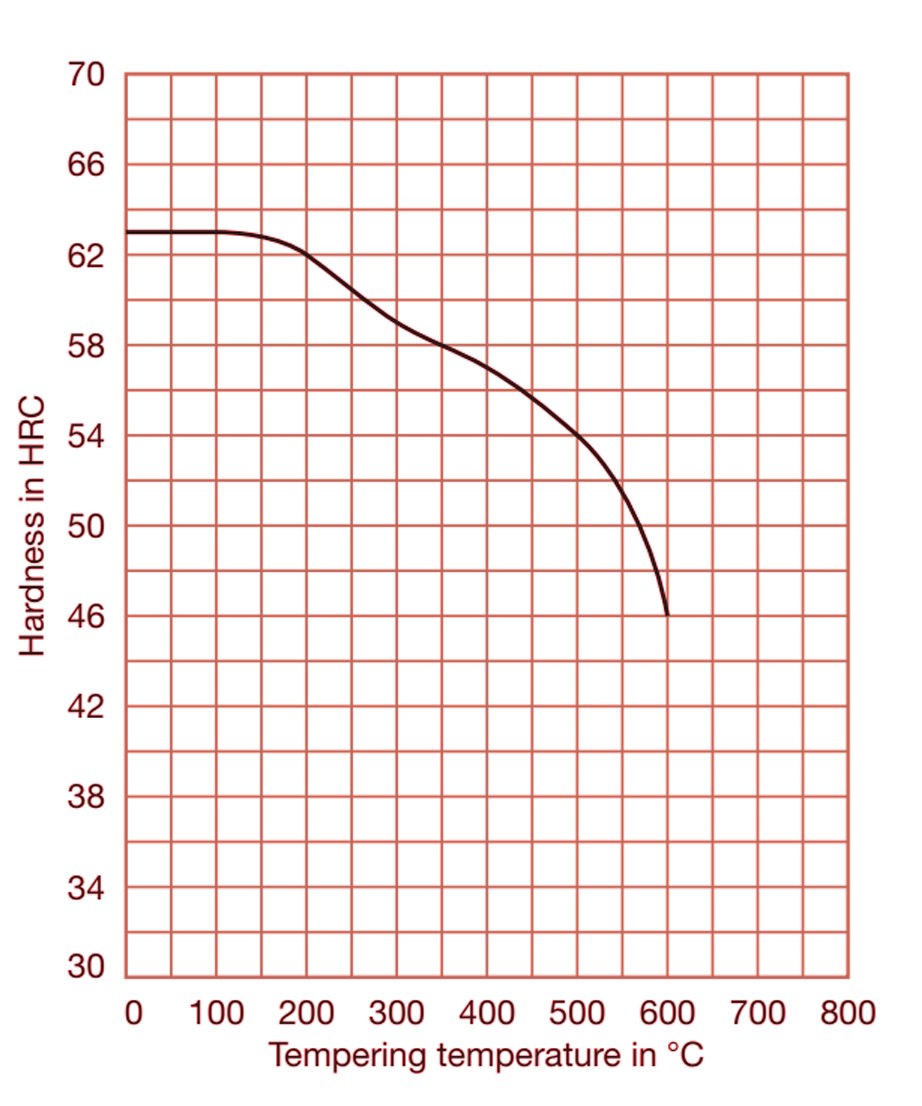
Tempering response (Hardness after tempering)
| °C | 100 | 200 | 300 | 400 | 500 | 600 |
|---|---|---|---|---|---|---|
| HRC | 63 | 62 | 59 | 57 | 54 | 46 |
⚡ Steel Weight Calculator
Precision Weight Calculator for Steel Sections