Tool Steel
P20 (1.2311) Steel is a pre-hardened plastic mold steel that is widely used for making plastic injection molds, die casting dies, and tooling components. It is known for its good machinability, uniform hardness, and excellent polishing ability, which makes it suitable for manufacturing high-quality molds with smooth surfaces. P20 steel is supplied in a pre-hardened condition, usually around 28–32 HRC, which means it generally does not require additional heat treatment before use. This helps reduce production time and cost in mold manufacturing.
P20 (1.2311) steel contains alloying elements such as carbon, chromium, manganese, and molybdenum, which provide good strength, wear resistance, and toughness. It also offers good dimensional stability, allowing molds to maintain their shape during long production cycles. Because of these properties, P20 steel is commonly used in industries that manufacture plastic products, automotive components, household appliances, packaging materials, and consumer goods. Its combination of strength, durability, and easy machining makes P20 (1.2311) one of the most popular steels for plastic mold and tooling applications.
Main characteristics and applications
Pre-hardened plastic mould steel with hardening penetration up to 400mm, with good polishing and texturing properties. This steel is suitable for nitriding (around 800 HV), chrome and nickel PVD plating. Used for plastic moulds with excellent surface finishing properties. It is also used for mould frames, plates, dies box, etc.
Comparable standards
| DIN | W.Nr | AFNOR |
|---|---|---|
| 40CrMnMo7 | 1.2311 | 1.2311 |
Chemical composition (typical; in weight %)
| C | Si | Mn | P (Max) | S (Max) | Cr | Mo |
|---|---|---|---|---|---|---|
| 0.35 - 0.45 | 0.20 - 0.40 | 1.30 - 1.60 | 0.03 | 0.03 | 1.80 - 2.10 | 0.15 - 0.25 |
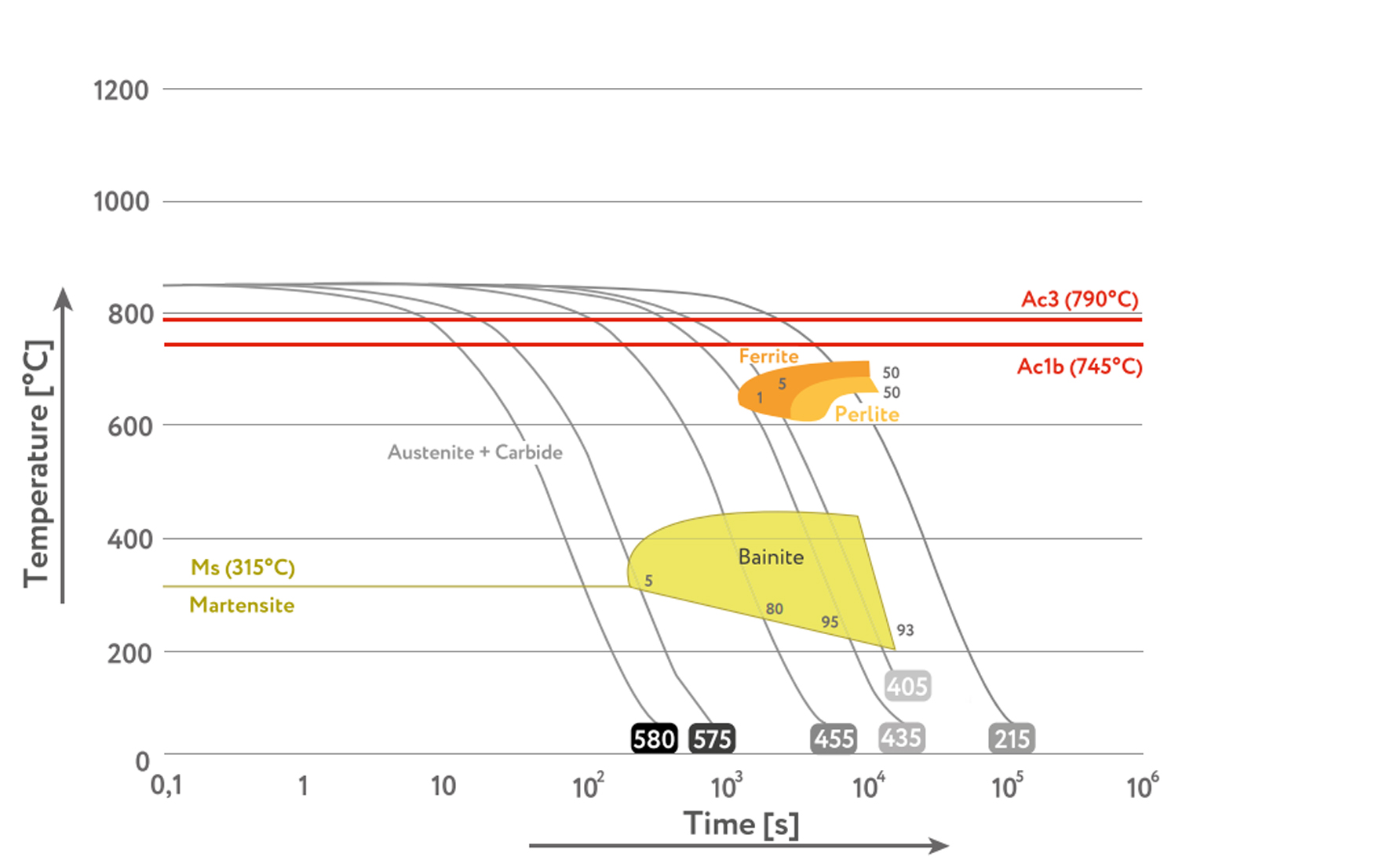
- Ac1: 740 °C
- Ac3: 820 °C
- Ms: 310 °C
- EAF – LF – VD – Forging – Heat treatment QT
- In accordance with standard EN10228-3 Class 4 and standard SEP 1921 Class E/e
- W.Nr. 1.2311 is delivered in quenched and tempered condition, with hardness range 280 – 325 HB (29 – 35 HRC).
| Property | 20°C | 100°C | 200°C | 500°C |
|---|---|---|---|---|
| Thermal expansion coefficient (10⁻⁶/K) | 12.1 | 12.4 | — | 14.1 |
| Thermal conductivity (W/m·K) | 36.1 | 36.2 | — | 33.5 |
| Young's modulus (kN/mm²) | 212 | 205 | — | 175 |
| Treatment | Temperature (°C) | Holding Time | Cooling | Comments |
|---|---|---|---|---|
| Annealing | 700 – 720 | Min. 2 min/mm | Air or furnace | In order to obtain hardness lower than 250 HB (24 HRC) to improve machinability |
| Stress relieving | 560 – 600 (max 30°C below tempering temp) |
Min. 2 min/mm | Air or furnace | To be carried out after machining to eliminate residual stresses induced by mechanical working |
| Hardening | 860 – 880 | Min. 1 min/mm | Polymer | — |
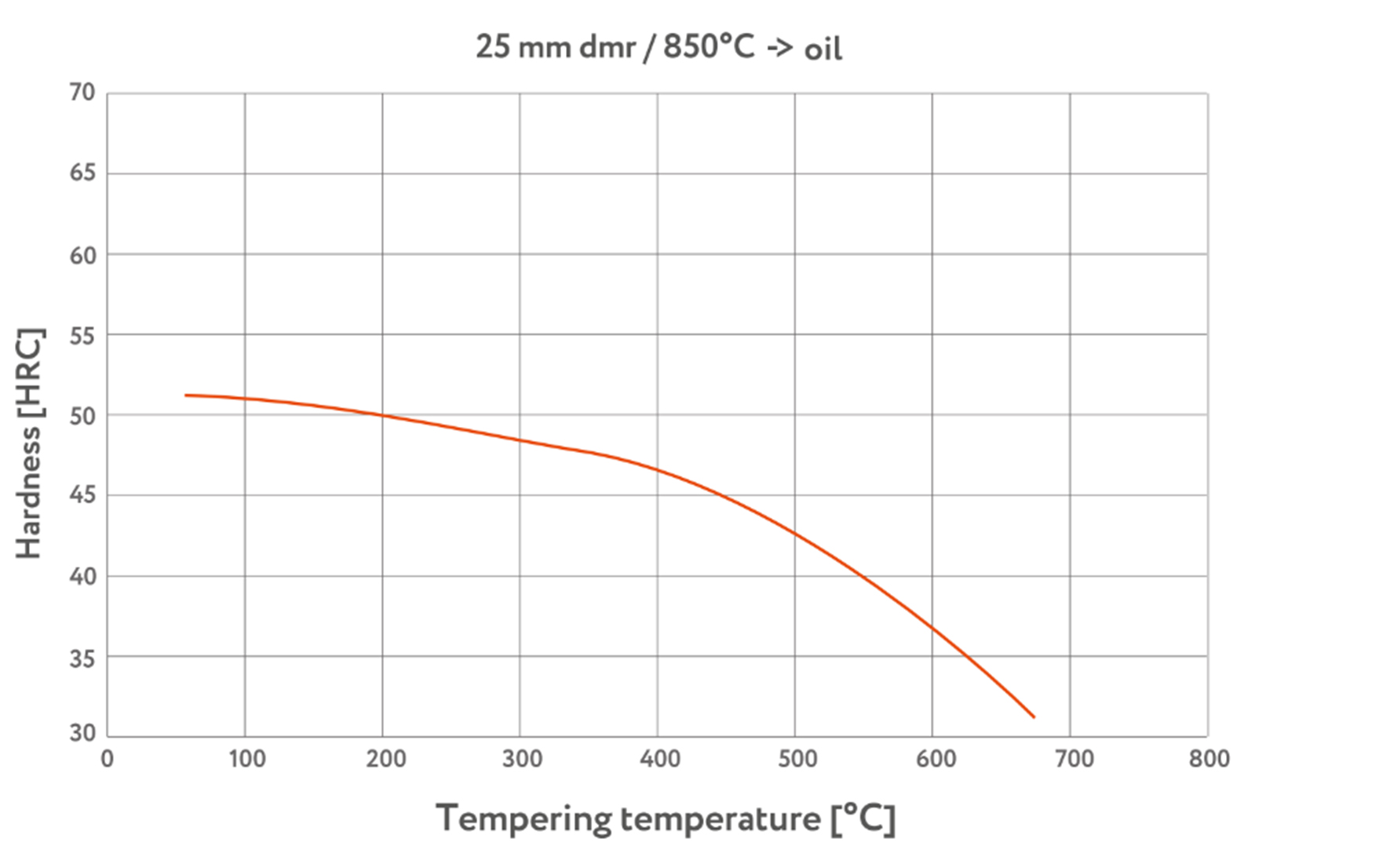
| Tempering | 550 – 600 | Min. 3 min/mm | Air or furnace | To be carried out after hardening. 2nd tempering must be performed to max 30°C below tempering temperature |
📌 Material Summary:
Type: Prehardened plastic mold steel
Delivery Condition: Quenched and tempered, 280-325 HB (29-35 HRC)
Key Characteristics: Excellent polishability, good machinability, uniform hardness throughout section
Typical Applications: Plastic injection molds, die casting dies, extrusion tools, mold bases
⚡ Steel Weight Calculator
Precision Weight Calculator for Steel Sections